Everything you need to know before
redesigning your Arizona backyard
A practical guide from 35 years of building in the East Valley. Soil conditions, heat cycles, rebate programs, permitting, materials, and what actually lasts in the desert — written for homeowners, not contractors.
35 years of building
in the East Valley
Chris Flores started Shadetree Landscape Design in 1989 with a straightforward philosophy: do the work right, use materials that last, and treat every homeowner's project the way you'd treat your own. That hasn't changed in 35 years.
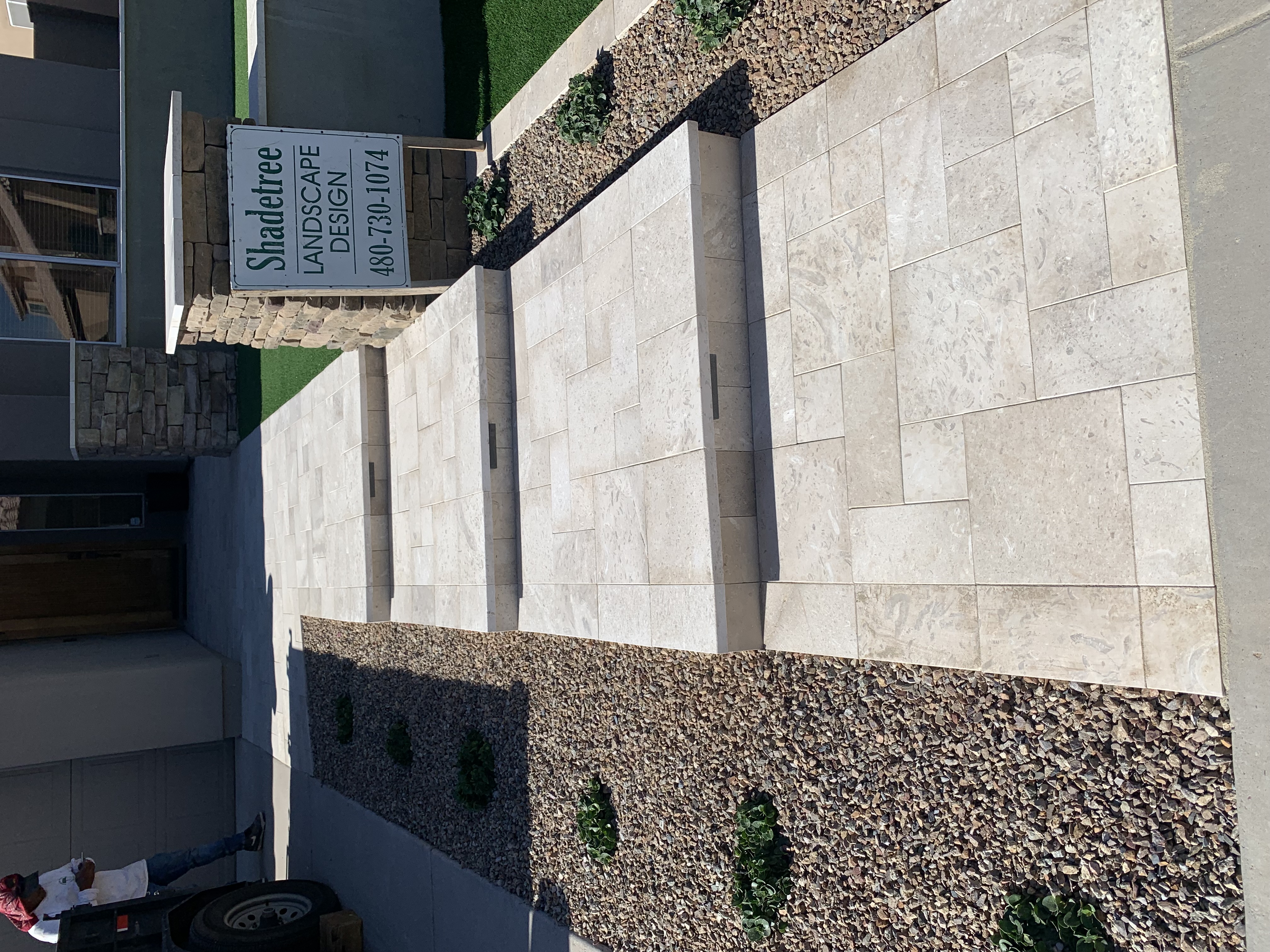
What has changed is the scale and complexity of what East Valley homeowners are asking for. The projects that were considered premium in 1989 — travertine pool decks, built-in outdoor kitchens, custom water features — are now what a well-maintained East Valley home expects. Chris has been building at that level the entire time, which is why Shadetree's portfolio looks the way it does.
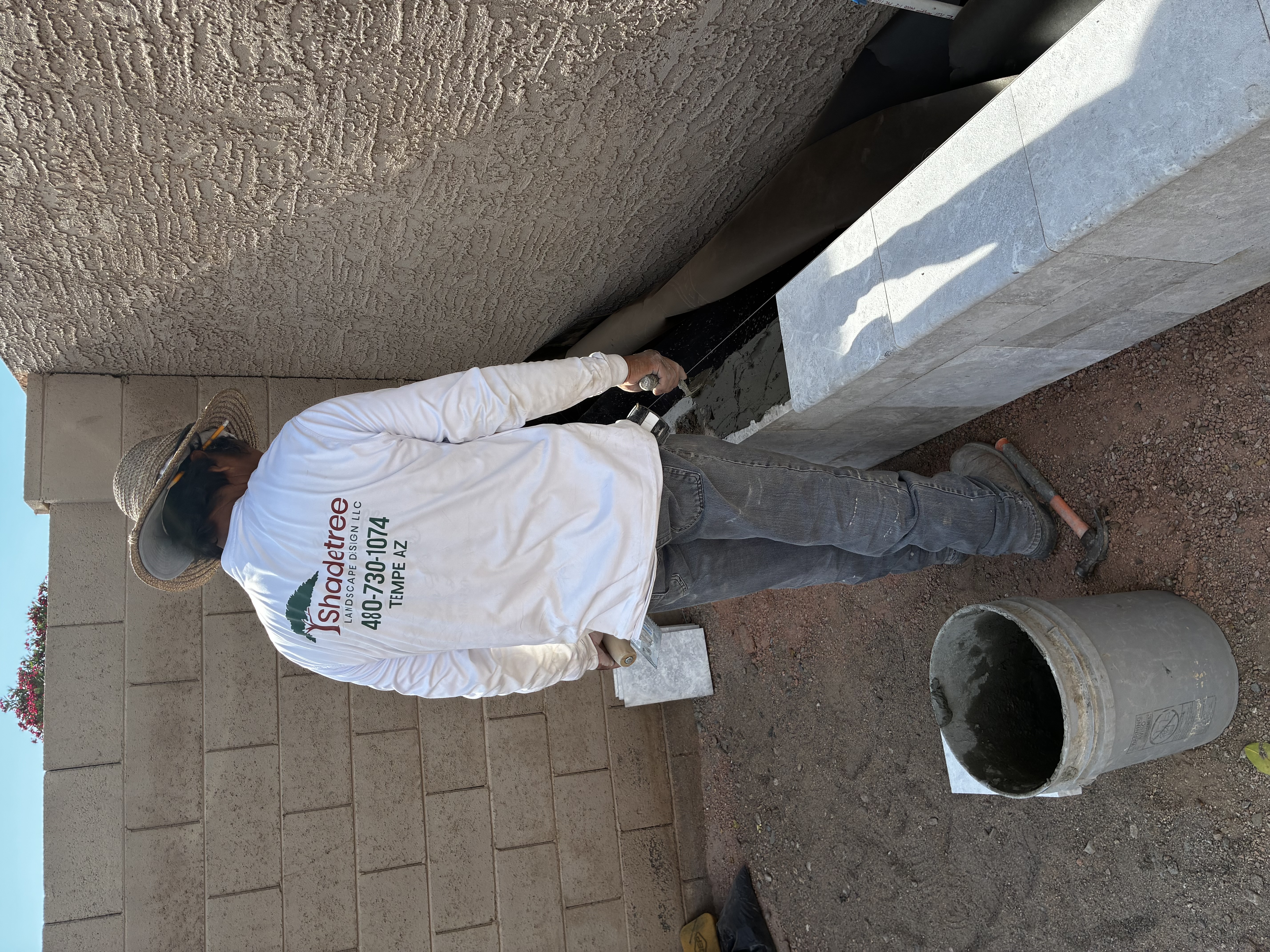
Every project Chris takes on is owner-supervised — meaning he's personally on site at critical stages of every build, not delegating to a crew he's checking in on from a truck. That's the commitment that produces 5.0-star results on 27 reviews, and it's the reason most of Shadetree's new clients come from referrals by past clients.
This guide reflects what Chris has learned from 35 years of building in this specific climate, in this specific market. It's not generic landscaping advice — it's what actually works in the East Valley.
What holds up — and what doesn't
Arizona heat changes everything. Here's the short version.
What makes Arizona landscaping
different from everywhere else
The East Valley has its own set of environmental conditions that no generic landscaping guide accounts for. Understanding these is the difference between a yard that looks great for two years and one that looks great for twenty.
Cities across the East Valley will
pay you to change your yard
Multiple cities in the Phoenix metro actively fund rebate programs that pay homeowners to remove grass and replace it with water-smart landscaping. These programs are real, funded, and active — but they require pre-approval before any work begins.
The basic idea: cities are trying to reduce residential water use. Outdoor irrigation — mostly lawn watering — accounts for up to 60% of residential water consumption in Arizona. Rebate programs give homeowners a financial incentive to remove grass and replace it with turf, xeriscape, or desert-adapted plants, which use a fraction of the water.
The programs vary by city — different amounts per square foot, different maximum payouts, different plant coverage requirements. Some require 30% desert plant coverage, others require 50%. Scottsdale's program is currently closed for the season. Phoenix offers the highest per-square-foot rate.
For specific current amounts and program status in your city, see our service areas page — we maintain updated rebate information for every city we serve.
What approvals you need
before starting any project
Two separate approval systems affect East Valley homeowners — city permits and HOA architectural review. They're independent of each other, and you often need both. Here's a plain-English guide to each.
Most standard landscaping work — planting, mulching, basic grading — doesn't require a city permit. But once you add structural elements or utility connections, permits are typically required.
Usually requires a permit: Retaining walls above a certain height (varies by city), gas line installation or alteration for outdoor kitchens and fire pits, plumbing connections for outdoor sinks, pool construction, electrical work for outdoor lighting or appliances, and any structural improvements to covered patios.
In Tempe: All permit applications go through the Citizen Access Portal online. Gas piping is regulated under the city's adopted fuel gas code.
In Scottsdale: Gas and plumbing work requires a plumbing permit before work begins. Masonry fireplaces, fire pits, and BBQs may also need planning approval depending on scope. Rebate projects additionally require a pre-inspection and Notice to Proceed.
In Chandler: Standard landscaping usually doesn't require a permit, but gas, plumbing, electrical, and retaining wall work do.
If your neighborhood has a homeowners association, any exterior change that's visible from the street or neighboring properties likely requires architectural review approval from your HOA — regardless of whether the city also requires a permit.
City permit approval does not satisfy or replace HOA approval. These are two completely separate processes run by two completely separate organizations. Getting your permit but not your HOA approval can result in being required to remove completed work at your own expense.
HOA requirements vary significantly by association. Some require full architectural drawings; others just want a description and material samples. The most important rule is to submit to your HOA before starting any visible exterior work.
We recommend confirming your HOA's CC&R requirements during the design phase — before permits are pulled and before any materials are ordered. We can help you understand what documentation your HOA is likely to need.
Take this guide with you
before you make any decisions
We put together this guide for homeowners who are seriously thinking about a backyard redesign but aren't sure where to start — or who want to go into contractor conversations knowing what to ask and what to watch for. It covers the financial case, the real costs, the rebate programs, and the permitting basics all in one place.
Ready to start planning
your backyard project?
Send us a message and Chris Flores will personally reach out to schedule a free walk-through of your property — no pressure, no obligation.